
Birds in This Story
Western Tanager
Latin: Piranga ludoviciana

Pinyon Jay
Latin: Gymnorhinus cyanocephalus

Burrowing Owl
Latin: Athene cunicularia

Ferruginous Hawk
Latin: Buteo regalis

Broad-tailed Hummingbird
Latin: Selasphorus platycercus

Throughout 2025 our staff and members remained focused on improving habitats and building community so Arizona and New Mexico can continue to be a place where birds thrive and people prosper. Take a look at some of our noteworthy achievements for the year.
Modernized the New Mexico Department of Wildlife (formerly Game & Fish)
Thanks to Audubon Southwest, our members, and partners; New Mexico’s wildlife agency now has the tools, funding, and authority to address the challenges of the next century. During the New Mexico 2025 Legislative session, our staff and members were tenacious in their successful effort to pass Senate Bill 5 which reforms and modernizes the New Mexico Department of Game and Fish. The approved legislation changes the name to the Department of Wildlife, secures $15 million in new annual funding ($4 million of which is specifically for non-game species in decline), restructures the Commission, and clarifies the authority of the Department to work on all wildlife in New Mexico including non-game species and invertebrates. These changes were essential to the recovery and management of the species we care about, birds included.
A visit from Senator Ruben Gallego
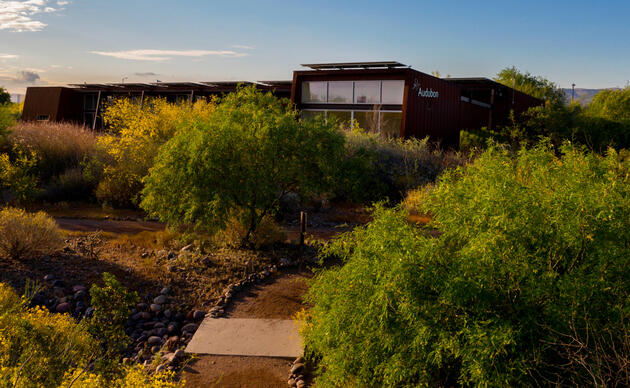
This September we welcomed U.S. Senator Ruben Gallego (D- AZ) to the Rio Salado Audubon Center in Phoenix. Along with enjoying some birding, Senator Gallego was there to kick off the inaugural meeting of his Conservation Leaders Advisory Board who will be providing his office and staff guidance and advice on policy issues related to conserving the natural resources of The Grand Canyon State. We greatly appreciate our partnership with the Senator, and we look forward to seeing what he can accomplish for the people and birds on Arizona.
Audubon Mural Project Lands at ABQ BioPark Zoo
Across the country, the Audubon Mural Project has been working with artists and municipalities to showcase public art that brings awareness to birds threatened by a changing climate. Now, thanks to the Bird Alliance of Central New Mexico, The Albuquerque BioPark Zoo is home to the newest set of Audubon murals. The murals by Albuquerque artists Jade Cruz and Donny Kelley-Currens feature southwest birds, including the Pinyon Jay, Western Tanager, Broad-tailed Hummingbird, and Ferruginous Hawk, all species in decline in our region. These gorgeous works of art not only bring some vibrant color to the Raptor exhibits at the zoo, but they also bring the plight of birds into vibrant perspective. Next time you’re in town please stop by and take a look.
Advancing Water Solutions in Arizona
The Verde River in north-central Arizona is one of state’s few remaining rivers that flows year-round. Due to sediment accumulation in Horseshoe Reservoir (one of two reservoirs on the Verde), there is a proposal to regain lost water storage capacity by enlarging Bartlett Reservoir (the other reservoir). Around 4,000 acres of habitat could be affected by a larger Bartlett Dam and Reservoir. The landscape that could be submerged stands out not only because endangered species live here, but because it is a large, contiguous riverside ecosystem—something not often found in Arizona and not easily replaced. Audubon Southwest has engaged with this project to ensure adequate habitat impacts are assessed and mitigated. And at the Arizona legislature, lawmakers proved that they can work in a bipartisan fashion on water issues in Arizona with the passage of Senate Bill 1611, groundwater savings credit, also known as “Ag to Urban” which will facilitate responsible and water-wise housing. As we face tough choices ahead on the Colorado River, Audubon will continue to engage with elected officials, agencies and industry to ensure habitats are protected and improved while also supplying water to a growing population in Phoenix.
Building Community
In 2025, we engaged almost 7000 people through education and outreach programs. Notably, over 700 people engaged in conservation action whether through an Audubon Southwest conservation volunteer day restoring Burrowing Owl habitat, invasive species pulling at the Rio Salado Audubon Center, or trail maintenance at the Randall Davey Audubon Center. We are fortunate to have so many partners in this work, including the Tiger Mountain Foundation, Arizona Sustainability Alliance, Protectors of the Salt River, Wild at Heart Wildlife Rehabilitation, Santa Fe Prep Service Learning students, Scouts, local Audubon chapters, and agency partners. These volunteers contributed thousands of hours helping to conserve bird habitat, restore native ecosystems, and support outdoor recreation at our two Centers.
Wings Over Working Lands Program Launch
With the launch of our Wings over Working Lands Team, Audubon is embarking on our largest program expansion since joining the Arizona and New Mexico offices. As the single largest land use in our two states, ranchers manage the majority of wildlife habitat in the Southwest. Working with this community to improve habitat conditions while also protecting the rancher’s “bottom line” in a voluntary mutually beneficial manner is the work ahead for this program. Our new team comes to us with an incredible amount of knowledge and expertise that they will put to use providing technical guidance and help with program enrollment to livestock producers with a focus on the Chihuahuan Grasslands of the border region in both states.
New Habitats at Appleton-Whittell Research Ranch
The Research Ranch’s network of ponds and artificial wetlands in ways replicate the many seeps and springs that once dotted the landscape in and between Arizona’s Sky Islands. As these and other natural water sources become less common due to human consumption and a changing climate, our managed sites grow increasingly valuable to birds and other wildlife. Thanks to support from Resolution Copper and RESOLVE, this year we were able to add a new wildlife water feature at our Appleton Well (which had not been in service since 2002), and thanks to the South32 Hermosa Community Fund we were able to restore the condition of our pond at Ranch Headquarters which enjoys myriad variety of wildlife visitors and provides habitat to endangered fish. Along with new signage and road improvements, the Appleton-Whittell Research Rach is looking incredible these days!
Thank you all for an incredible year in conservation, we can’t wait to see what 2026 brings for birds and people in the Southwest.
To learn more about all of our work at Audubon Southwest, read our Impact Report.